TB-500 Technical Overview
TB-500 is a synthetic version of Thymosin Beta-4, a naturally occurring 43 amino acid peptide found in virtually all mammalian cells. Thymosin Beta-4 acts as a multifunctional regulatory peptide comprising distinct bioactive regions within its structure: the N-terminal tetrapeptide (Ac-SDKP) mediates anti-inflammatory and antifibrotic activities, amino acids 1-15 inhibit apoptosis and promote cell survival, while the central actin-binding region at residues 17 to 23, LKKTETQ, is the segment studied in actin sequestration, cell migration, and tissue-repair research models.
Two sequence regions carry most of the mechanistic work in the literature. The actin-binding motif LKKTET at residues 17 to 22 mediates G-actin sequestration, and the fragment supplied here, LKKTETQ at residues 17 to 23, carries that motif. The N-terminal tetrapeptide Ac-SDKP is a separately characterized fragment with its own experimental record.
Compound Specifications
| Property | Value |
|---|---|
| Synonyms | TB-500, TB500, Ac-Leu-Lys-Lys-Thr-Glu-Thr-Gln-OH, thymosin beta-4 fragment 17-23 |
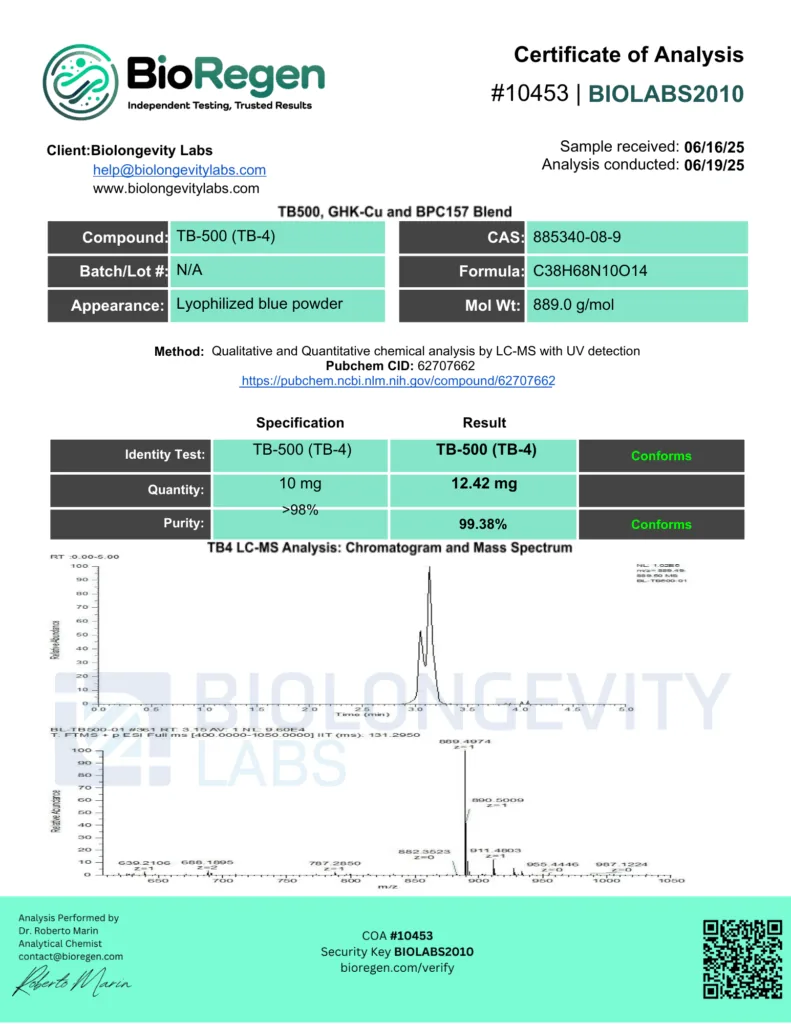
| CAS Number | 885340-08-9 |
| PubChem CID | 62707662 |
| Molecular Formula | C₃₈H₆₈N₁₀O₁₄ |
| Molecular Weight | 889.0 g/mol |
| Monoisotopic Mass | 888.4916 Da |
| Amino Acid Sequence | Ac-LKKTETQ (Ac-Leu-Lys-Lys-Thr-Glu-Thr-Gln) |
| Sequence Length | 7 residues, N-terminally acetylated |
| Parent Sequence Region | Thymosin beta-4 residues 17 to 23 |
| Actin-Binding Motif | LKKTET (residues 17 to 22 of thymosin beta-4) |
| Source | Synthetic |
| InChIKey | ADKDNDYYIZUVCZ-ZQNQAVPYSA-N |
| UNII | QHK6Z47GTG |
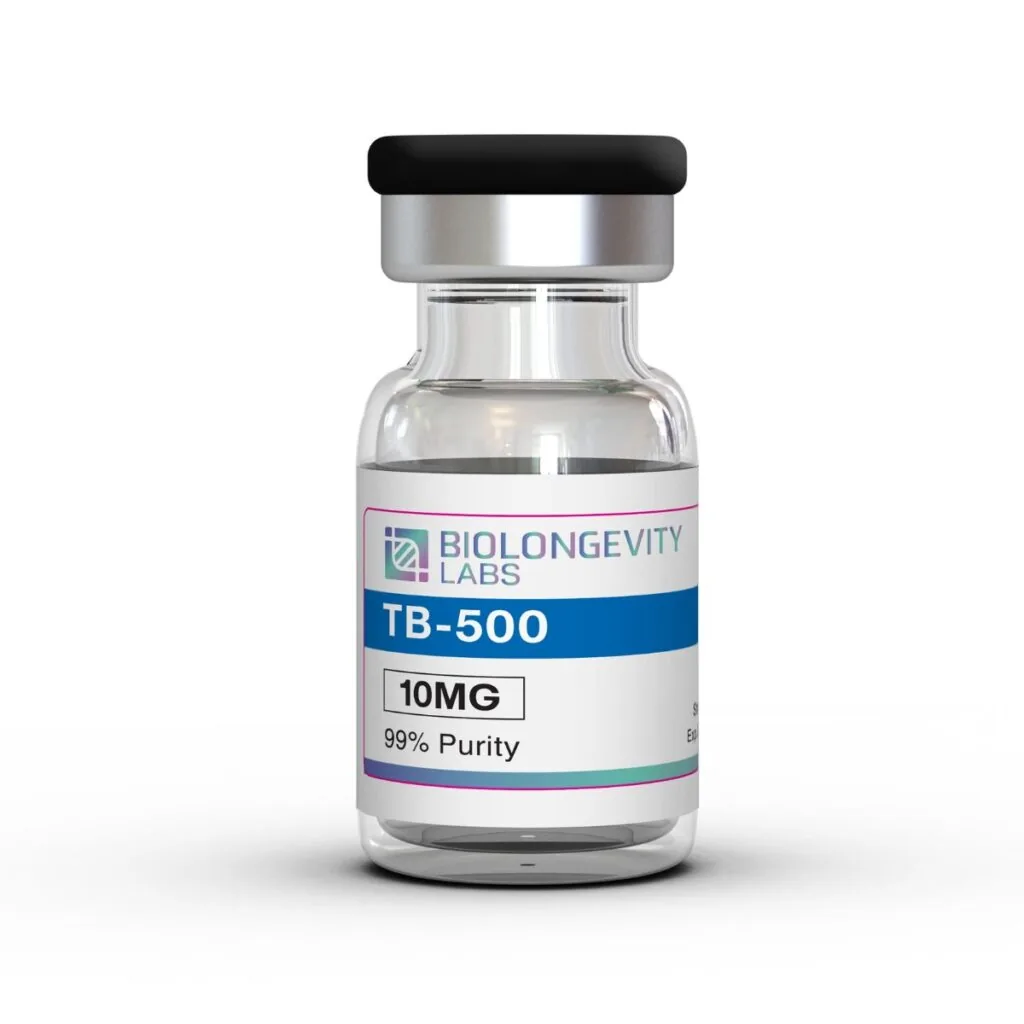
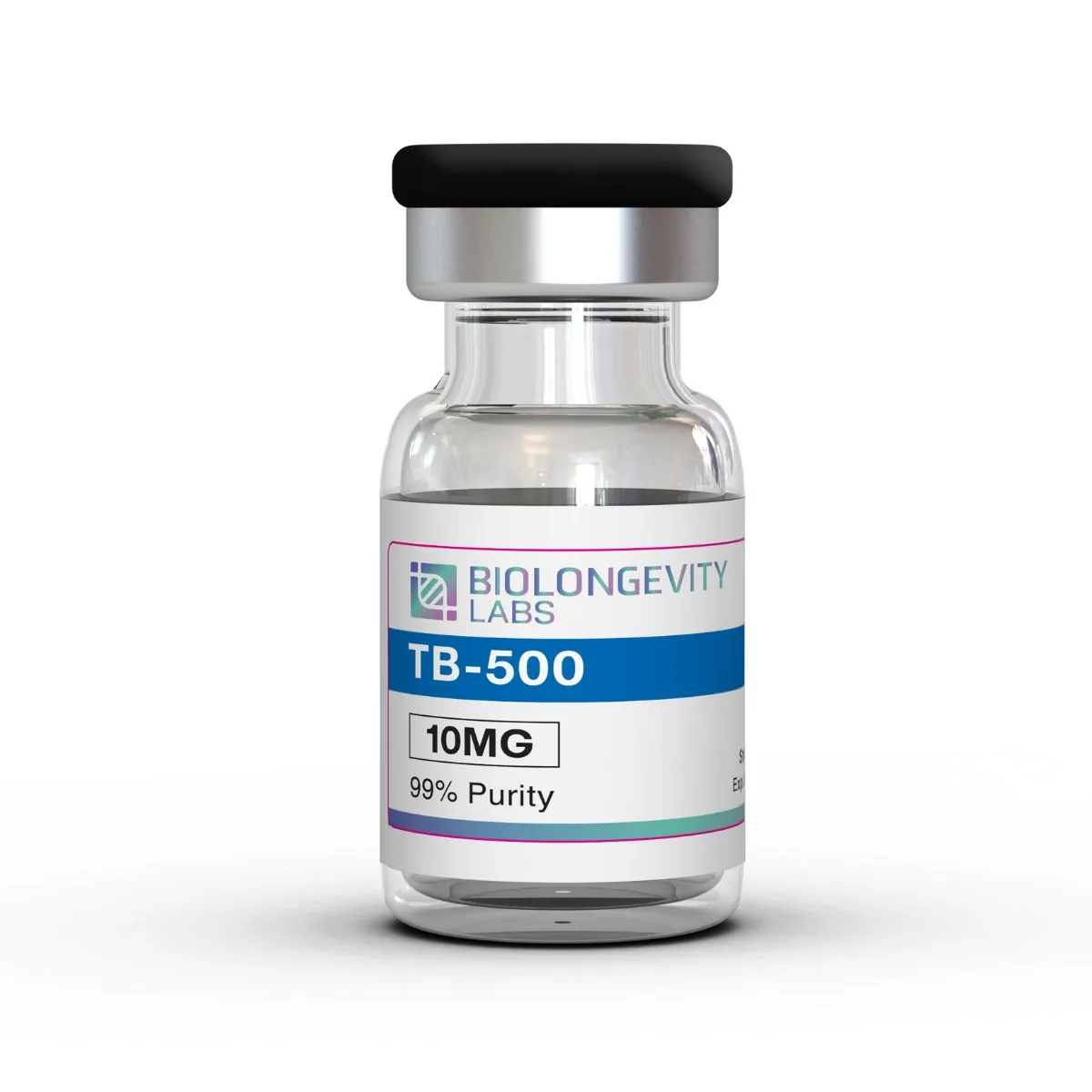
| Purity | ≥99% (HPLC) |
| Appearance | Lyophilized white powder |
| Solubility | Soluble in water |
| Storage | -20°C, protect from light |
Storage and Handling
- Store the lyophilized compound at -20°C, sealed and protected from light.
- After reconstitution, store at 2°C to 8°C and use promptly.
- Allow the vial to reach room temperature before opening to limit moisture uptake.
- Brief sonication may be required for complete dissolution at higher working concentrations.
- Maintain aseptic handling to preserve compound integrity.
Lyophilized Format
This compound ships in lyophilized (freeze-dried) form. Freeze-drying supports long-term storage stability and preserves compound integrity. No fillers are added.
Frequently Asked Questions
Is TB-500 Third-Party Tested?
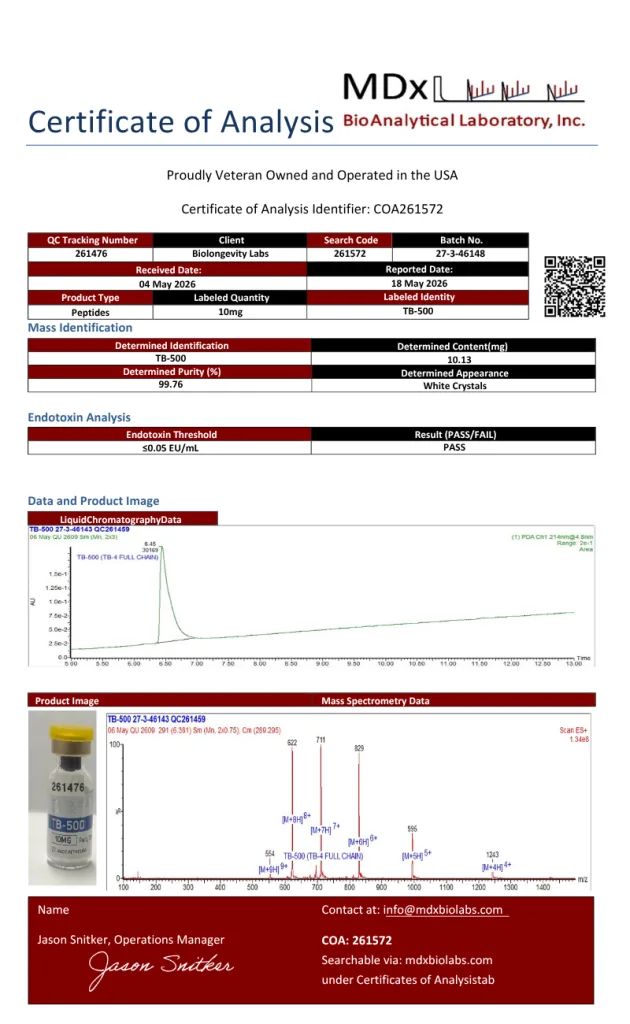
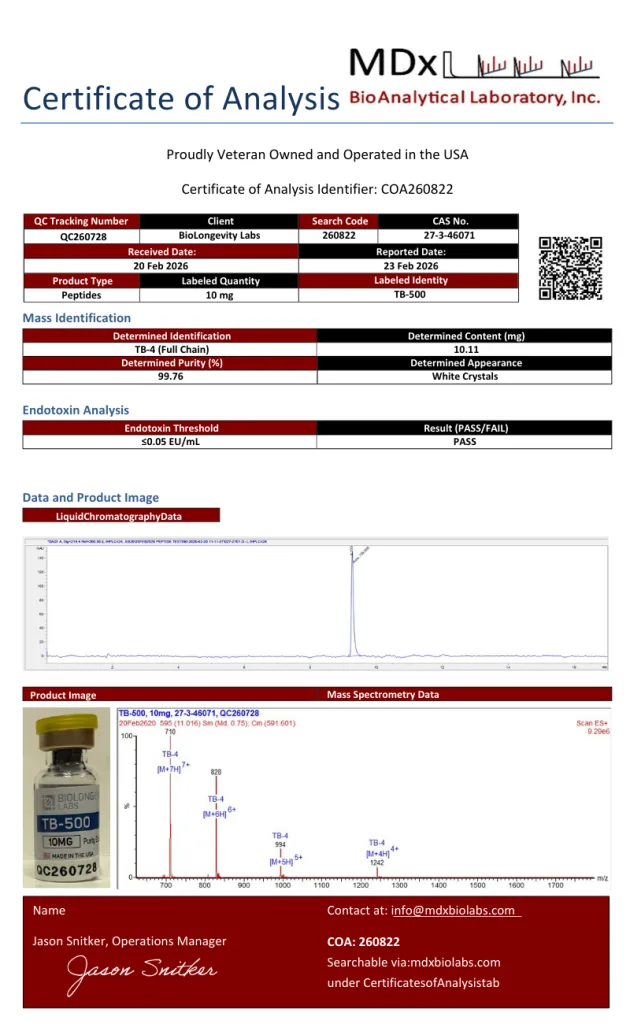
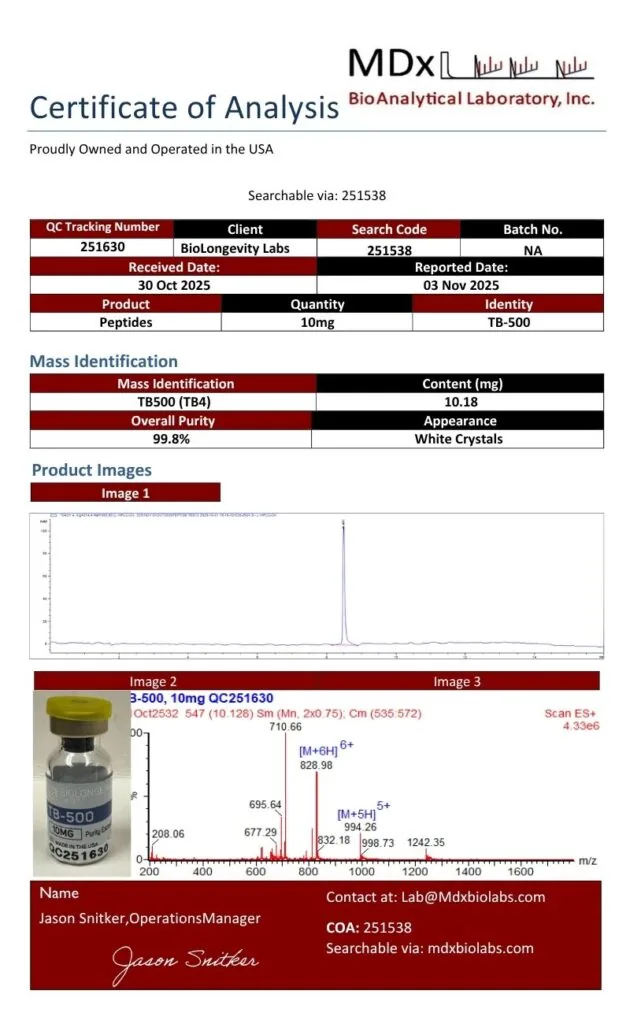
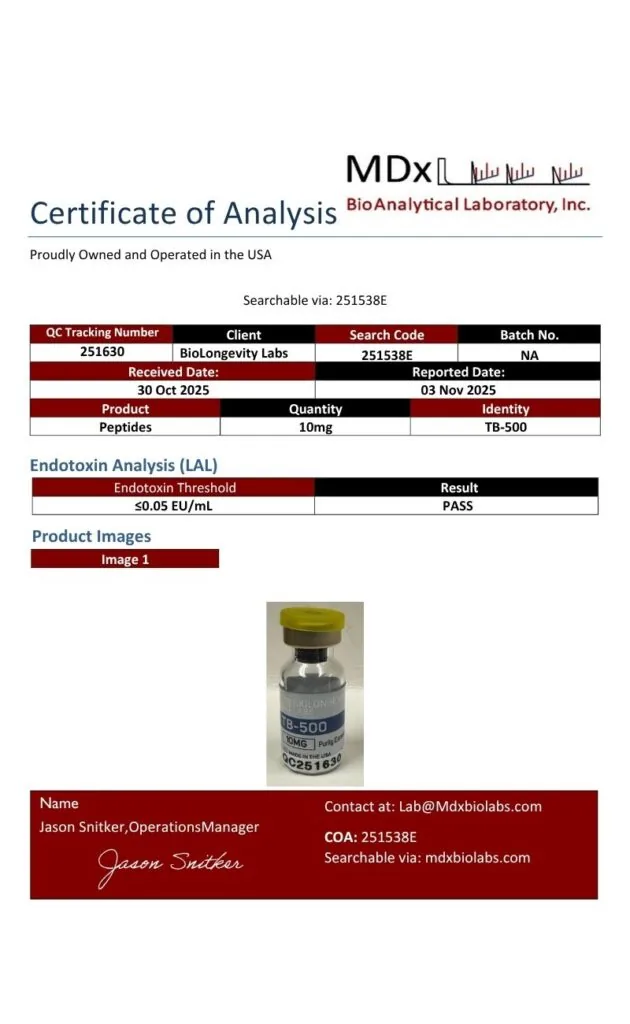
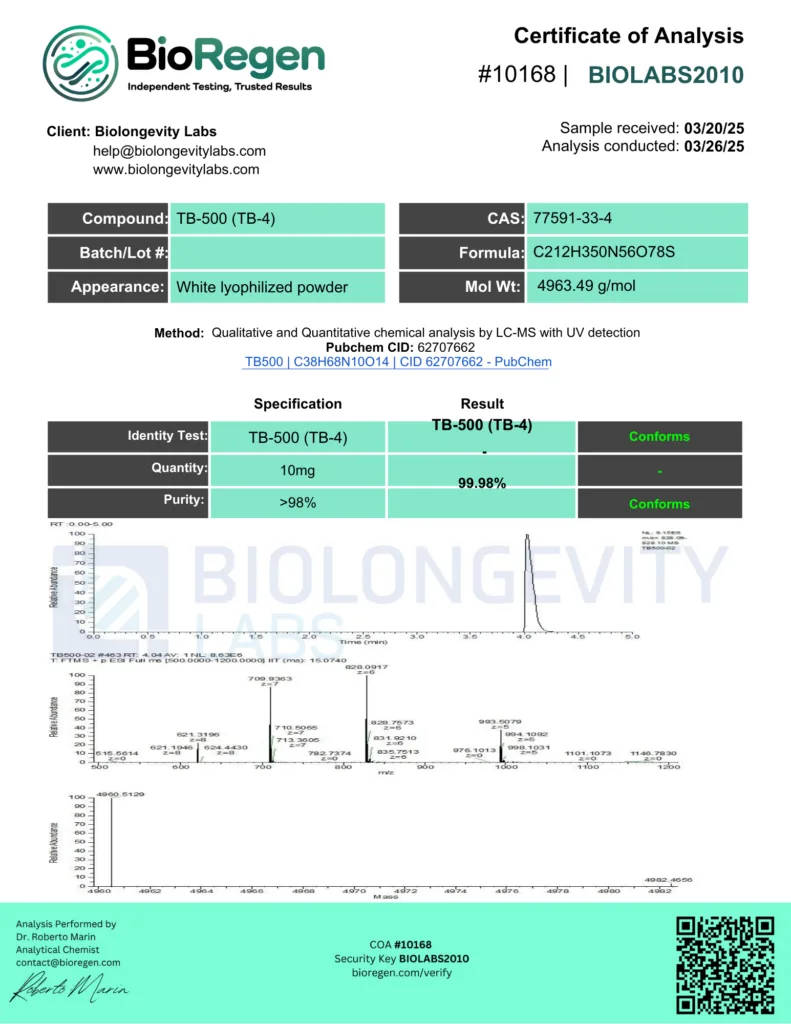
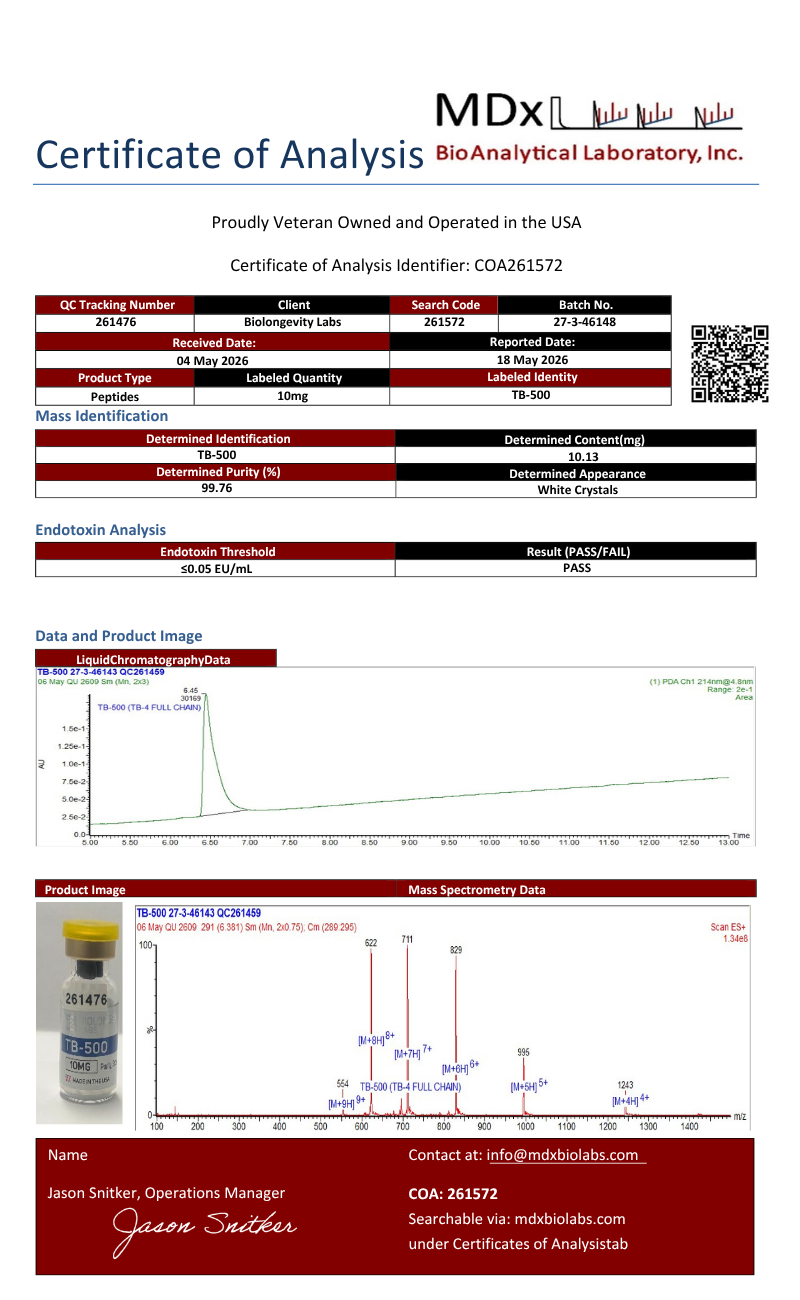
Yes. Every batch of TB-500 is tested by an independent third-party laboratory for identity and purity against a ≥99% purity specification. BioLongevity Labs does not perform in-house testing on its own compounds.
Can I See the TB-500 COA Before I Order?
Yes. The current Certificate of Analysis for TB-500 is linked at the top of this page, and the complete COA library is available to view without an account. Certificates are published online and are not included with shipments.
How Can I Verify the TB-500 COA?
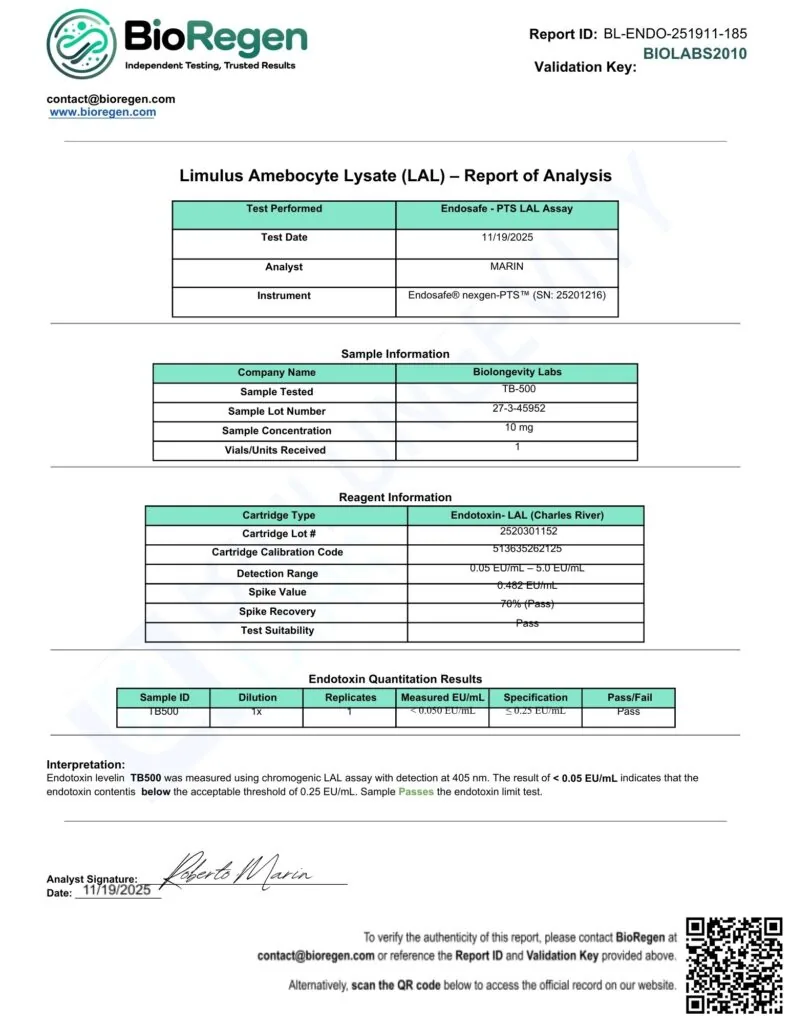
Each certificate can be verified directly with the issuing laboratory. AV Analytics certificates include a QR code and a search code that retrieve the original record from the laboratory’s website, and BioRegen reports include a Report ID and a Validation Key. Learn more about COA verification.
How Quickly Does TB-500 Ship, and How Should It Be Stored?
In-stock orders placed and paid before 12 PM PT typically ship the same business day from the United States via USPS Priority, FedEx 2 Day or FedEx Overnight. Orders over $400 qualify for free shipping, and international shipping is available to many destinations. Lyophilized material should be stored at −20°C, away from light and moisture.
What If My TB-500 Order Is Incorrect?
Due to our rigorous quality control standards and the fragile nature of these products, we cannot accept returns on research compound vials. If an order arrives with an incorrect item, please contact our team and a replacement for the original order will be issued.
Is TB-500 the Same as Thymosin Beta-4?
No. Thymosin beta-4 is a naturally occurring 43-residue peptide, while TB-500 is a shorter synthetic peptide modeled on its central actin-binding region at residues 17 to 23.