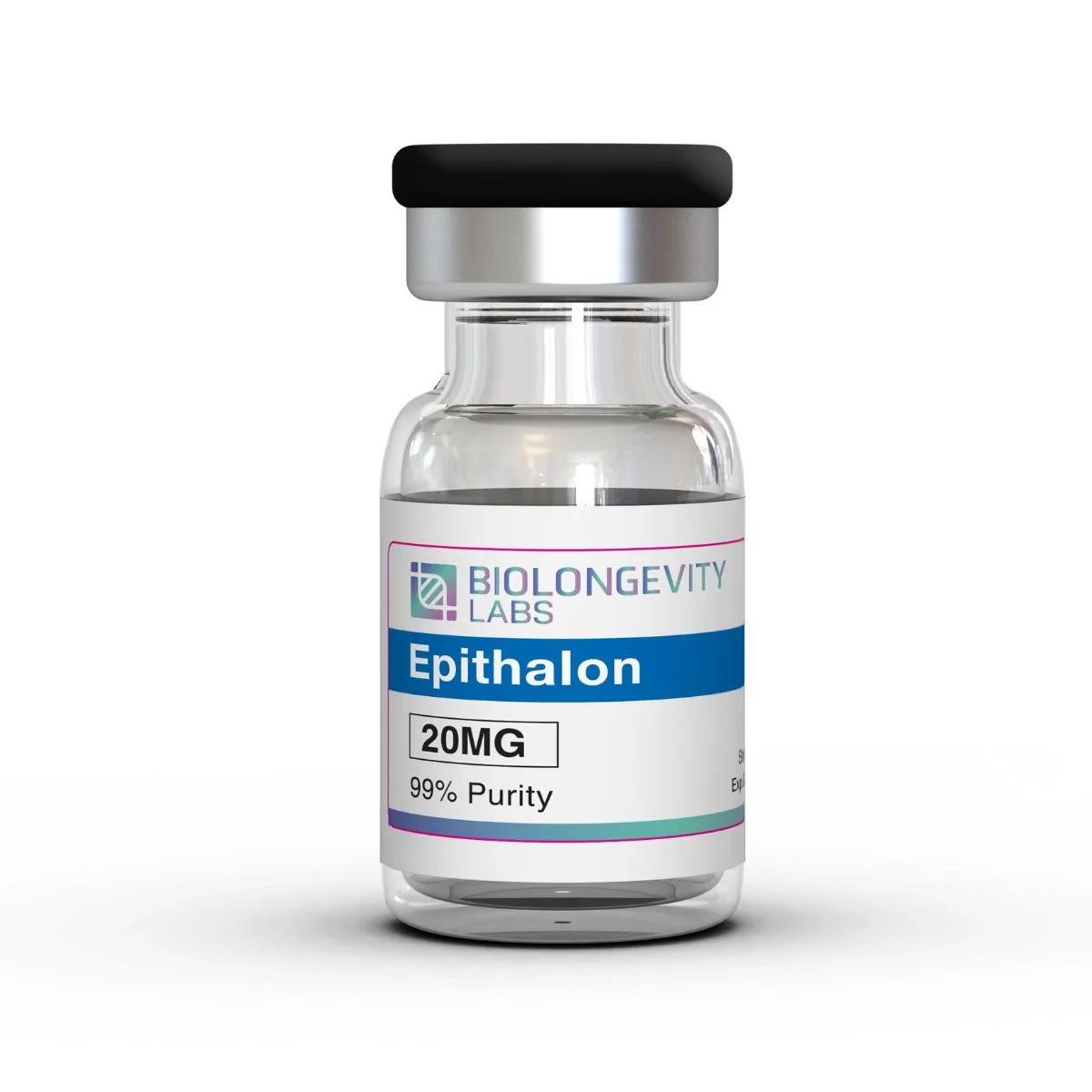

Epithalon Technical Overview
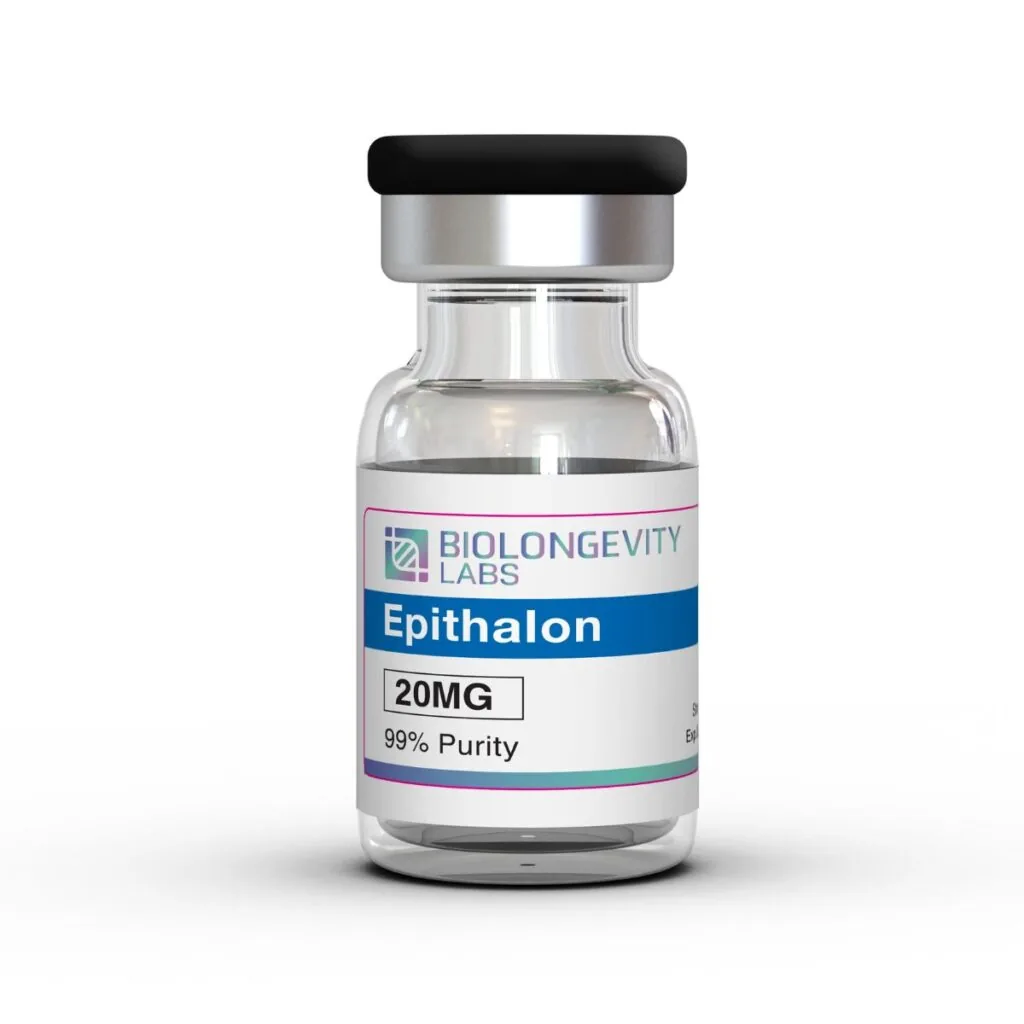
Epithalon is a short synthetic peptide built from four amino acids in the sequence Ala-Glu-Asp-Gly. Its structure was modeled on the amino acid composition of Epithalamin, a pineal gland extract studied in gerontology research.
As a defined tetrapeptide, Epithalon is well suited to analytical and mechanistic work. It is supplied as a filler-free lyophilized powder and reconstituted with a sterile solvent immediately before experimental use.
The compound sits within the pineal and AEDG peptide research area, alongside related bioregulator compounds studied for cellular signaling and regulatory function.
Compound Specifications
| Property | Value |
|---|---|
| CAS Number | 307297-39-8 |
| PubChem CID | 219042 |
| Molecular Formula | C₁₄H₂₂N₄O₉ |
| Molecular Weight | 390.35 g/mol |
| Amino Acid Sequence | Ala-Glu-Asp-Gly (AEDG) |
| Sequence Length | 4 residues (tetrapeptide) |
| IUPAC | L-alanyl-L-alpha-glutamyl-L-alpha-aspartyl-glycine |
| Synonyms | Epitalon, Epithalone, AEDG peptide |
| Source | Synthetic |
| Purity | ≥99% (HPLC) |
| Appearance | Lyophilized white powder |
| Solubility | Soluble in water |
| Storage | -20°C, protect from light |
Epithalon Peptide Structure
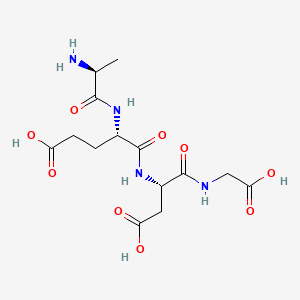
Source: PubChem
Research Applications
| Research Area | In Vitro Application |
|---|---|
| Telomere biology | Experimental systems measuring telomerase-associated activity and telomere-length metrics in cell-based models |
| Gene expression | Assays quantifying transcriptional changes in defined differentiation markers |
| Epigenetic regulation | Molecular-modeling and binding studies of peptide and histone interactions |
| Peptide characterization | Analytical evaluation of tetrapeptide identity, sequence, and stability |
Storage and Handling
- Store the lyophilized compound at -20°C, protected from light.
- After reconstitution, store at 2-8°C and use promptly.
- Maintain aseptic handling to preserve compound integrity.
Frequently Asked Questions
Is Epithalon Third-Party Tested?
Yes. Every batch of Epithalon is tested by an independent third-party laboratory for identity and purity against a ≥99% purity specification. BioLongevity Labs does not perform in-house testing on its own compounds.
Can I See the Epithalon COA Before I Order?
Yes. The current Certificate of Analysis for Epithalon is linked at the top of this page, and the complete COA library is available to view without an account. Certificates are published online and are not included with shipments.
How Can I Verify the Epithalon COA?
Each certificate can be verified directly with the issuing laboratory. AV Analytics certificates include a QR code and a search code that retrieve the original record from the laboratory’s website, and BioRegen reports include a Report ID and a Validation Key. Learn more about COA verification.
How Quickly Does Epithalon Ship, and How Should It Be Stored?
In-stock orders placed and paid before 12 PM PT typically ship the same business day from the United States via USPS Priority, FedEx 2 Day or FedEx Overnight. Orders over $400 qualify for free shipping, and international shipping is available to many destinations. Lyophilized material should be stored at −20°C, away from light and moisture.
What If My Epithalon Order Is Incorrect?
Due to our rigorous quality control standards and the fragile nature of these products, we cannot accept returns on research compound vials. If an order arrives with an incorrect item, please contact our team and a replacement for the original order will be issued.
Is Epithalon the Same as Epithalamin?
No. Epithalamin is a pineal gland extract, while Epithalon is a defined four-residue synthetic peptide whose sequence was modeled on the amino acid composition of that extract.
Research Overview
In telomere-biology research models, Epithalon has been associated with changes in telomerase-associated activity and telomere-length metrics. Cell-line studies have reported telomere-length extension linked to hTERT expression and telomerase upregulation [2]. Comparable telomere-length changes have been observed in lymphocyte models across adult study populations [4].
Epithalon has also been examined for transcriptional effects. In stem-cell models, the AEDG peptide was associated with changes in the expression of neuronal differentiation markers, and molecular-modeling work proposed a histone-interaction mechanism as one possible basis [3].
Within the broader short-peptide literature, AEDG has been studied as a regulator of cell differentiation [5]. A 2025 review consolidates the analytical, in vitro, and in silico characterization of the tetrapeptide reported to date [1].
Reported endpoints across this work are measured under defined laboratory conditions, which is the context the tetrapeptide has been characterized in to date.
Telomere-Associated Research
Telomere-focused work with Epithalon centers on enzymology and length measurement in cell-based systems. Reported endpoints include telomerase-associated activity, telomere-length metrics, and downstream genome-integrity markers, measured under defined laboratory conditions [2].
References
- Araj SK, Brzezik J, Mądra-Gackowska K, Szeleszczuk Ł. (2025). Overview of Epitalon-Highly Bioactive Pineal Tetrapeptide with Promising Properties. International Journal of Molecular Sciences. https://doi.org/10.3390/ijms26062691
- Al-Dulaimi S, Thomas R, Matta S, Roberts T. (2025). Epitalon increases telomere length in human cell lines through telomerase upregulation or ALT activity. Biogerontology. https://doi.org/10.1007/s10522-025-10315-x (see also the published correction, https://doi.org/10.1007/s10522-025-10326-8)
- Khavinson V, Diomede F, Mironova E, Linkova N, Trofimova S, Trubiani O, Caputi S, Sinjari B. (2020). AEDG Peptide (Epitalon) Stimulates Gene Expression and Protein Synthesis during Neurogenesis: Possible Epigenetic Mechanism. Molecules. https://doi.org/10.3390/molecules25030609
- Khavinson VK, Pendina AA, Efimova OA, et al. (2019). Effect of Peptide AEDG on Telomere Length and Mitotic Index of PHA-Stimulated Human Blood Lymphocytes. Bulletin of Experimental Biology and Medicine. https://doi.org/10.1007/s10517-019-04664-0
- Khavinson V, Linkova N, Diatlova A, Trofimova S. (2020). Peptide Regulation of Cell Differentiation. Stem Cell Reviews and Reports. https://doi.org/10.1007/s12015-019-09938-8
Certificate of Analysis (COA)
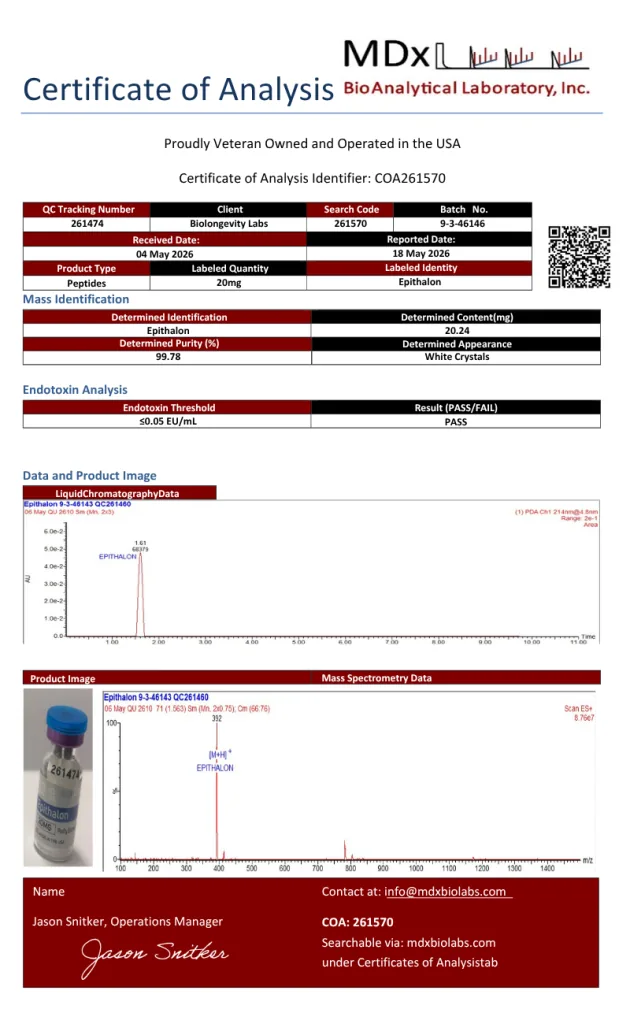
Epithalon (261474)
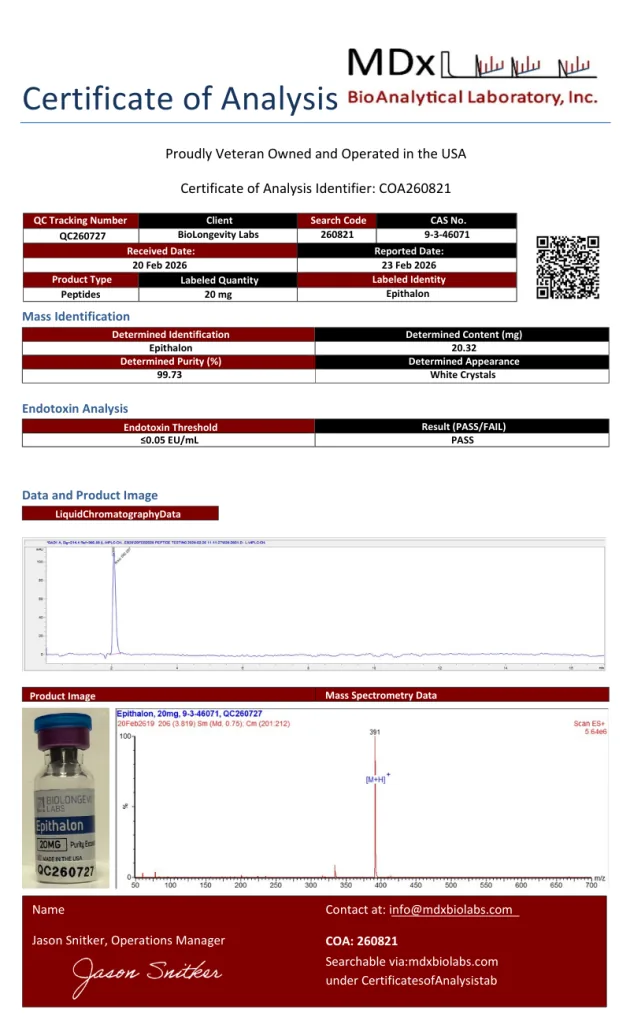
Epithalon (260821)
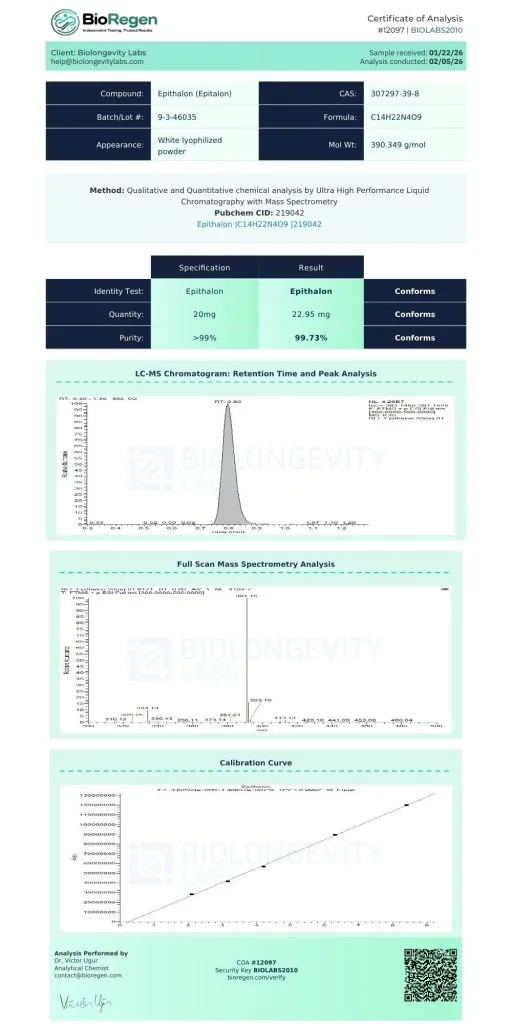
Epithalon (12097)
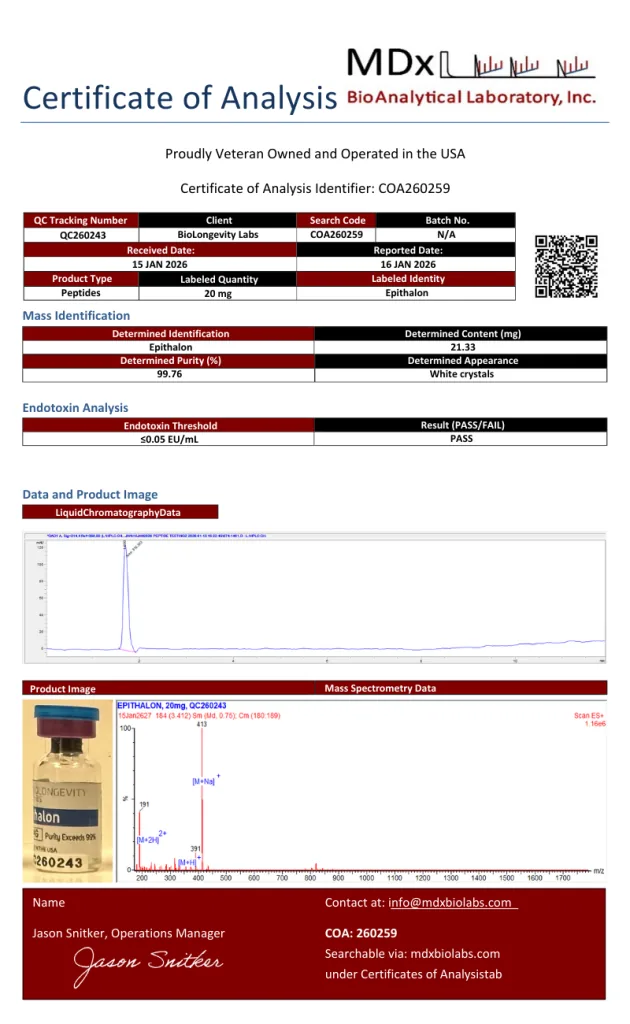
Epithalon (260259)
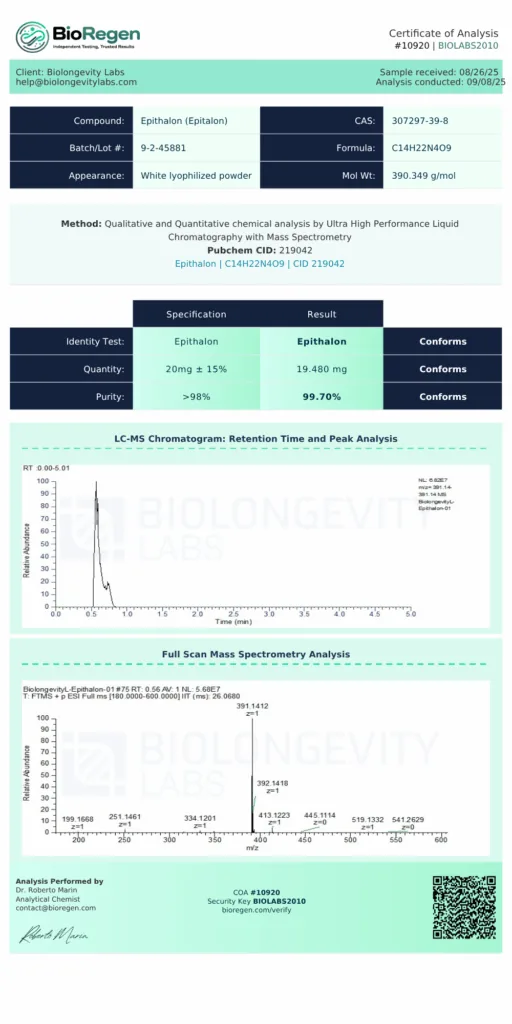
Ephitalon(10920)
Epithalon (2502050023)
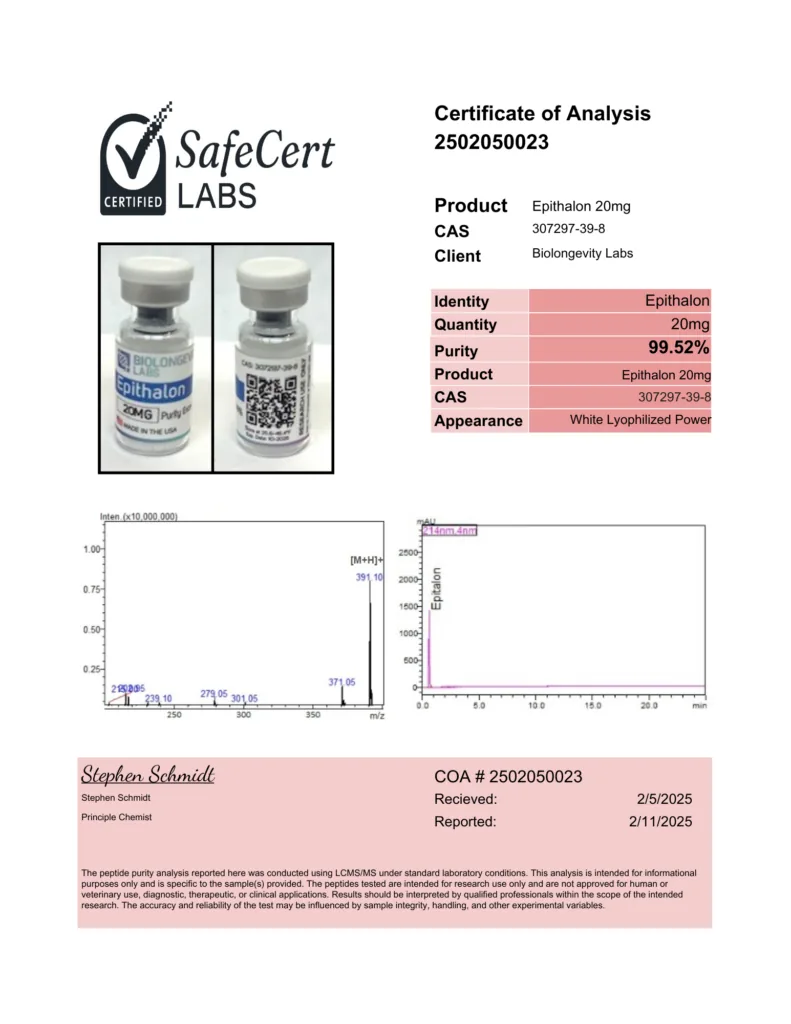
A Certificate of Analysis (COA) is a document that verifies a compound’s identity, purity and quality through independent laboratory testing. Every compound from BioLongevity Labs is third-party tested, and its COA is published here, so researchers can review the testing record before a compound enters a protocol.
Each COA reports results from third-party laboratory analysis, including:
- Ultra-high-performance liquid chromatography with mass spectrometry (UHPLC-MS) for purity, measured against a 98% or 99% specification depending on the compound
- Mass identification for molecular confirmation and content quantitation
- Endotoxin testing by Limulus amebocyte lysate (LAL) or recombinant Factor C (rFC) assay, depending on the laboratory
- Visual and physical characterization of the finished material
How to Verify a COA Independently
You can check every certificate against the issuing laboratory’s own records, not just the copy hosted here. Verification does not depend on BioLongevity Labs.
- AV Analytics certificates carry a search code. Scan the QR code on the certificate to open the laboratory’s verification page, or enter the search code at avanalytical.com/coa-search to pull the official record.
- BioRegen reports of analysis carry a Report ID and a Validation Key. Scan the QR code on the certificate to open the official record, or quote both identifiers when you contact the laboratory at the address printed on the report.
- SafeCert Labs issued a number of earlier certificates. Each one carries a COA number and the signature of the reporting chemist. Quote that number when you ask the laboratory to confirm it.
- Older certificates from other laboratories list their own verification details on the document.
When a batch is sent to more than one laboratory, each certificate resolves at its own issuing laboratory. A researcher can then check the results against two unrelated sources.
These COAs come from independent certified laboratories, not in-house testing. That gives researchers a verifiable record of molecular integrity for each compound. All compounds are supplied for research use only.
Review the latest COAs for this product below, or browse the full COA library.