Technical Overview
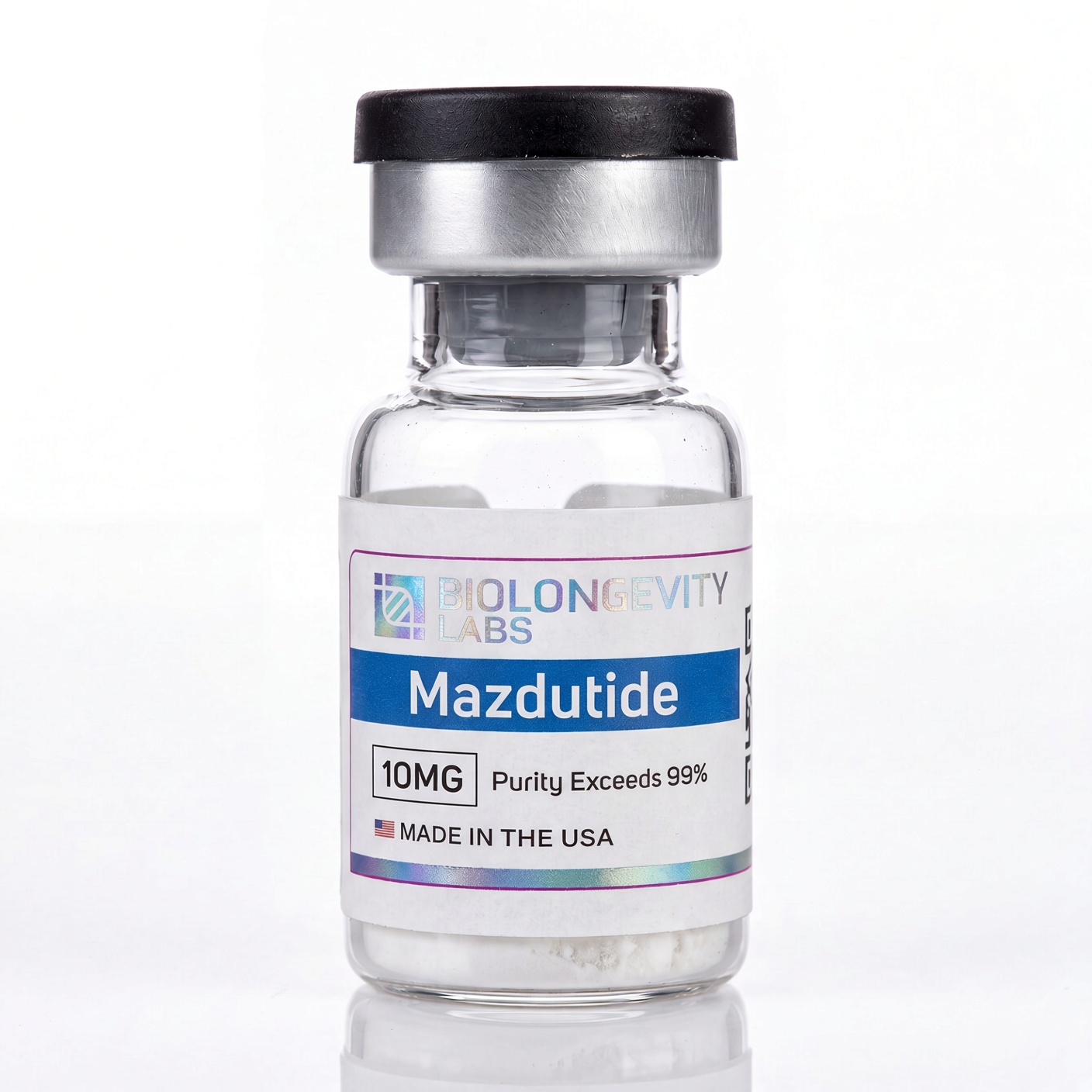
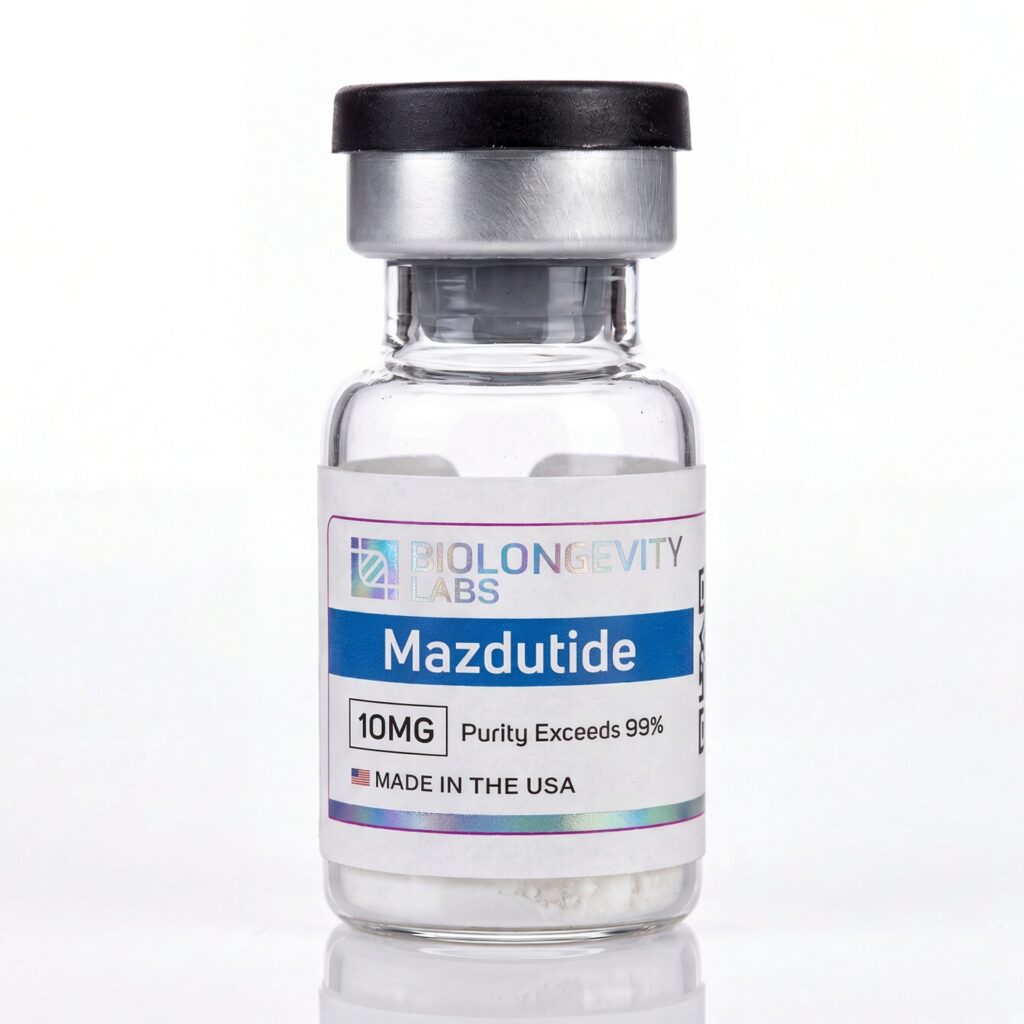
Mazdutide is a fatty-acid-modified analogue of oxyntomodulin, a peptide derived from proglucagon. Published research characterizes mazdutide as an agonist of both the glucagon-like peptide-1 receptor (GLP-1R) and the glucagon receptor (GCGR). Its oxyntomodulin-derived structure provides useful context when comparing it with other dual-receptor agonists.
Compound Specifications
| Property |
Value |
| Listed Amount |
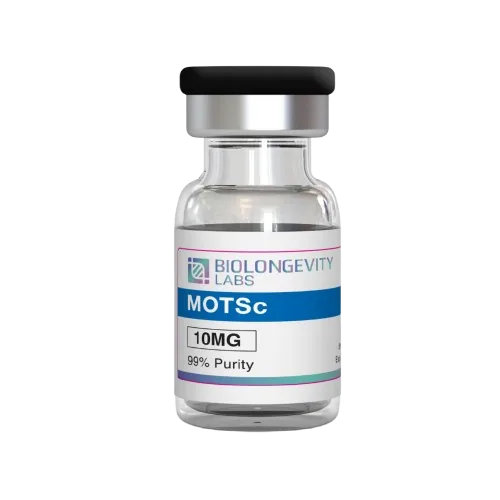
10 mg |
| Compound Class |
Fatty-acid-modified oxyntomodulin analogue |
| Research Designations |
IBI362, LY3305677 |
| Receptor Targets |
GLP-1R and GCGR |
| PubChem Reference CID |
167312357 |
| FDA Reference UNII |
MB76Z4IBZ5 |
Storage and Handling
- Store the lyophilized compound at -20°C, protected from light.
- After reconstitution with bacteriostatic water, store at 2°C to 8°C.
- Avoid repeated freeze-thaw cycles, which degrade short peptides in solution.
- Maintain aseptic handling to preserve compound integrity.
Research Use Disclaimer
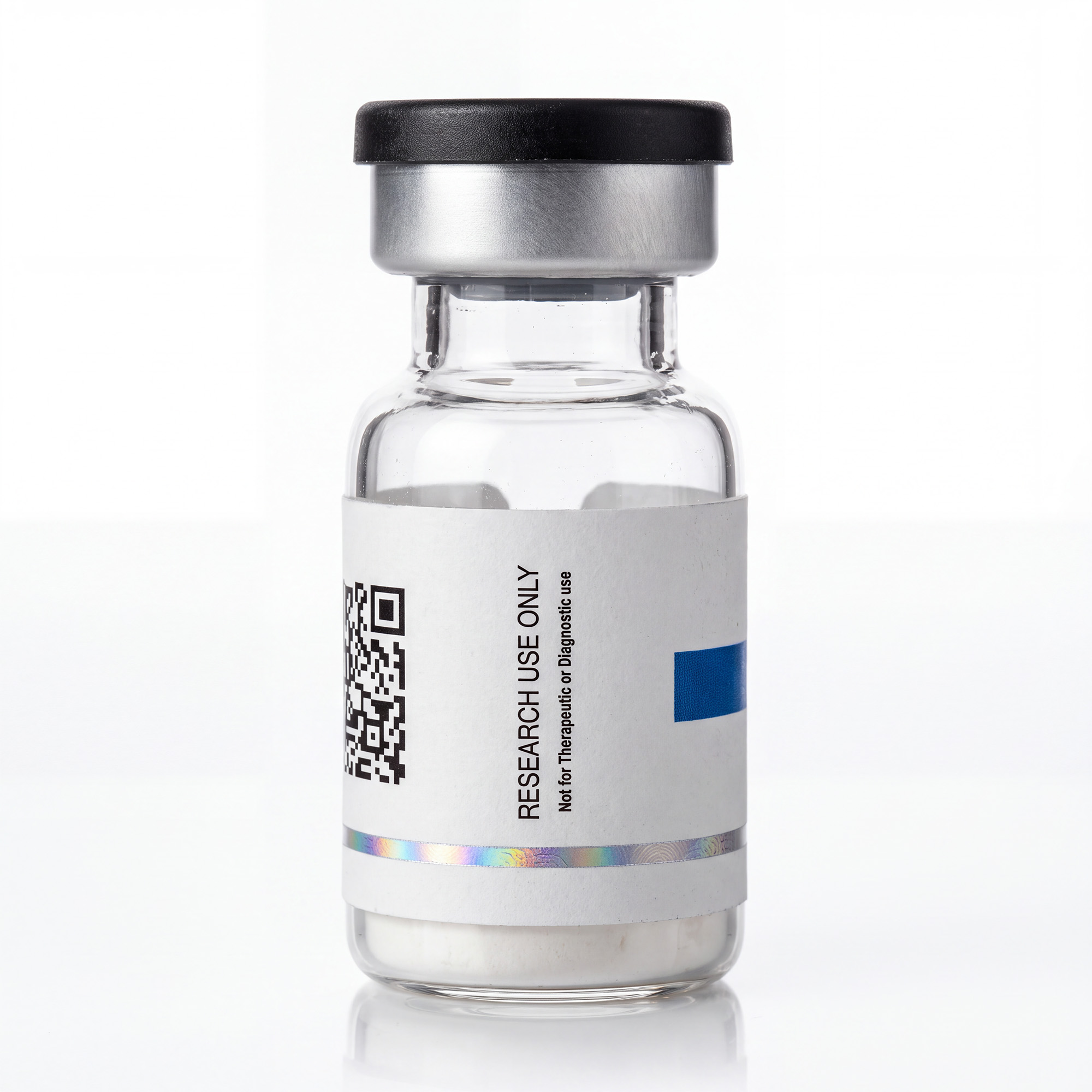
Mazdutide is supplied for in vitro laboratory research only.
Frequently Asked Questions
What Are the Research Codes for Mazdutide?
Mazdutide appears in the literature as IBI362 and LY3305677.
Which Receptors Are Studied With Mazdutide?
Mazdutide is characterized as an agonist at GLP-1R and GCGR.
Certificate of Analysis (COA)
No COAs available for this product.
A Certificate of Analysis (COA) is a document that verifies a compound’s identity, purity and quality through independent laboratory testing. Every compound from BioLongevity Labs is third-party tested, and its COA is published here, so researchers can review the testing record before a compound enters a protocol.
Each COA reports results from third-party laboratory analysis, including:
- Ultra-high-performance liquid chromatography with mass spectrometry (UHPLC-MS) for purity, measured against a 98% or 99% specification depending on the compound
- Mass identification for molecular confirmation and content quantitation
- Endotoxin testing by Limulus amebocyte lysate (LAL) or recombinant Factor C (rFC) assay, depending on the laboratory
- Visual and physical characterization of the finished material
How to Verify a COA Independently
You can check every certificate against the issuing laboratory’s own records, not just the copy hosted here. Verification does not depend on BioLongevity Labs.
- AV Analytics certificates carry a search code. Scan the QR code on the certificate to open the laboratory’s verification page, or enter the search code at avanalytical.com/coa-search to pull the official record.
- BioRegen reports of analysis carry a Report ID and a Validation Key. Scan the QR code on the certificate to open the official record, or quote both identifiers when you contact the laboratory at the address printed on the report.
- SafeCert Labs issued a number of earlier certificates. Each one carries a COA number and the signature of the reporting chemist. Quote that number when you ask the laboratory to confirm it.
- Older certificates from other laboratories list their own verification details on the document.
When a batch is sent to more than one laboratory, each certificate resolves at its own issuing laboratory. A researcher can then check the results against two unrelated sources.
These COAs come from independent certified laboratories, not in-house testing. That gives researchers a verifiable record of molecular integrity for each compound. All compounds are supplied for research use only.
Review the latest COAs for this product below, or browse the full COA library.